
Brief Overview of Surface Finishing in Manufacturing
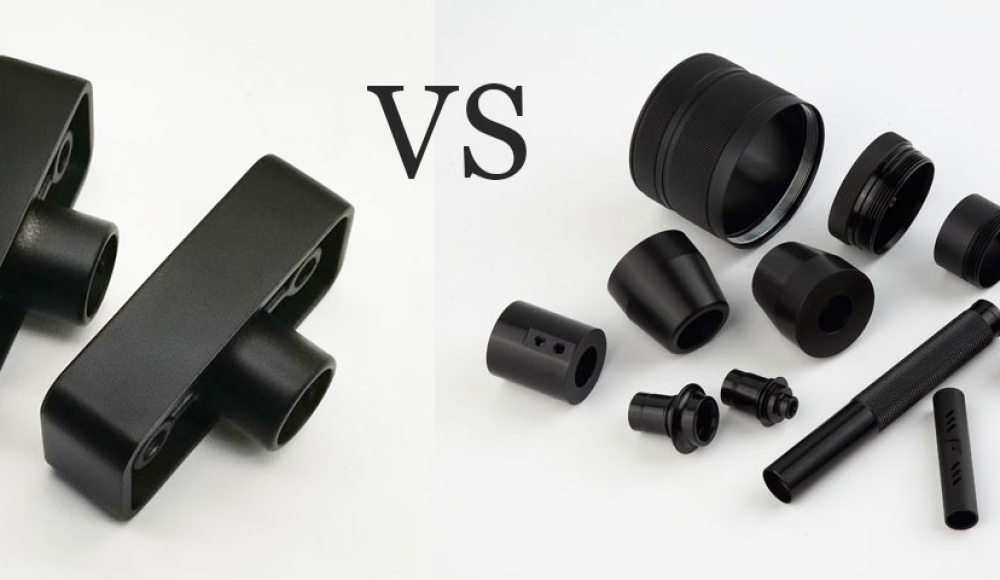
Black anodize and black oxide coatings are not the same, though they are both surface finishing processes that provide a black finish. Each has distinct characteristics, applications, and methods of application. Here’s a brief comparison:
Black Anodizing
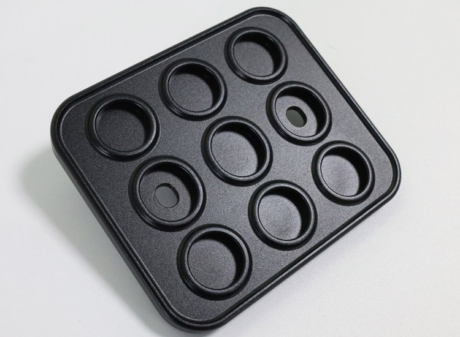
Definition
Black anodizing is a surface finishing process that involves the electrochemical treatment of aluminum to create a protective oxide layer. This oxide layer is black in color and contributes to enhanced durability, corrosion resistance, and aesthetic appeal.
Characteristics
- Color Formation
The distinctive black color is achieved through the introduction of organic or inorganic dyes during the anodizing process.
- Durability
The resulting black oxide layer improves the material’s resistance to wear, corrosion, and scratches.
- Aesthetic Appeal
Black anodizing provides a sleek and uniform appearance, making it a popular choice for decorative applications.
Applications
- Aerospace Industry
As black anodizing is resistant to adverse weather conditions, it is frequently used in aircraft applications.
- Automotive Components
Black anodizing is used on a lot of car parts, such wheels and trim pieces, because it’s a stylish and durable material.
- Architectural Elements
Because of the process’s appearance and ability to resist corrosion in natural environments, it is used in architectural projects.
- Consumer Electronics
Black anodizing, which offers a durable and pleasing finish, is commonly found in electronics and gadgets.
Advantages:
- Enhanced Durability
Black anodizing increases the lifetime of aluminum components by enhancing the material’s overall durability.
- Corrosion Resistance
The material’s resistance to corrosion is strengthened by the protective oxide layer that forms during anodizing, making it suited to a number of situations.
- Aesthetic Versatility
A number of black shades and finishes may be produced with this procedure, giving users the flexibility to satisfy their aesthetic choices.
- Uniform Appearance
The polished surface has a uniform color due to black anodizing, which also improves the overall appearance.
- Environmentally Friendly
Since anodizing doesn’t use heavy metals or cause hazardous waste products, it is a generally environmentally friendly technique that complies with sustainability objectives.
What is Black Oxide Coating?
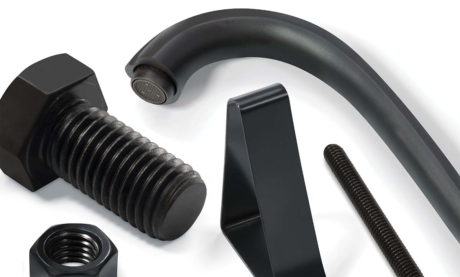
Definition
The ferrous metals are coated with black oxide coating, often referred to as blackening, which is a chemical conversion process. By applying a layer of black iron oxide on the metal’s surface, this surface treatment improves wear resistance, corrosion resistance, and appearance.
Characteristics
- Color Formation
A layer of black iron oxide is formed when oxidizing salts and the metallic surface react chemically, giving rise to the black color.
- Corrosion Resistance
By improving the metal’s ability to withstand corrosion, black oxide coating helps shield it from harm from the outside.
- Wear Resistance
By improving to wear resistance, the coating allows it for use on components that have been subjected to abrasion and friction.
- Dimensional Stability
Black oxide provides accurate fit as well as performance through without significantly changing the treated metal’s dimensions.
Applications
- Tooling and Machining Components
Due to its corrosion resistance and wear resistance, black oxide is often utilized on tools and machined components.
- Firearms
Black oxide coating is often used on gun parts to improve the part’s appearance and weather resistance.
- Hardware and Fasteners
Black oxide coating provides a protective layer and a pleasing finish to nuts, bolts, and other fasteners.
- Automotive Components
Black oxide is used in a variety of automotive parts, including gears and engine components, for both aesthetic and protection reasons.
Advantages
- Enhanced Corrosion Protection
The layer of protection that black oxide offers lowers the metal’s resistance to corrosion in every kind of environments.
- Improved Wear Resistance
The coating makes the metal more resistant to wear and friction, prolonging the life of components that have been treated.
- Aesthetic Appeal
Black oxide provides coated surfaces a smooth, uniform black finish that enhances their appearance.
- Minimal Dimensional Change
Black oxide ensures proper fit and function without significantly changing the treated metal’s dimensions.
- Cost-Effective
The technique ensures durability without significantly raising production costs when compared to certain alternative coating techniques.
What is the Difference Between Black Anodizing and Black Oxide Coating?
| Aspect | Black Anodizing | Black Oxide Coating |
| Material Compatibility | Primarily aluminum, non-ferrous metals | Primarily ferrous metals (steel, iron) |
| Process and Application | Electrochemical process on aluminum | Chemical conversion process on ferrous metals |
| Appearance and Aesthetic Differences | Uniform, sleek black finish, often matte | Black finish, sometimes darker and lustrous |
| Durability and Corrosion Resistance | Excellent corrosion resistance, durability | Enhanced corrosion resistance, good durability |
| Physical Properties | Improves physical properties of the metal | Does not significantly alter physical properties |
| Cost Implications and Efficiency | Higher initial cost, long-term efficiency | More cost-effective initially, slightly lower durability |
| Environmental Impact and Safety | Generally considered more environmentally friendly | Chemical baths may raise environmental and safety considerations |
Advantages and Limitations of Black Anodize and Black Oxide
Advantages of Black Anodize over Black Oxide
- Enhanced Resistance to Corrosion
Offers high resistance to corrosion, making it suitable for use in severe environments.
- Resilience and Resistance to Wear
Increases the usefulness of coated components by producing a tough, wear-resistant surface.
- Aesthetic Versatility
Can be customized to satisfy a variety of visual preferences, offering a selection of black coatings and shades.
- Material Compatibility
Black anodize is mainly used on aluminum, but it can also be applied to other non-ferrous metals.
- Uniform Appearance
Black anodize produces a matte-looking, uniform, and refined black finish.
Advantages of Black Oxide over Black Anodize
- Cost-Effectiveness
Initially, it’s generally cheaper and thus it’s a good choice for some applications.
- Application to Ferrous Metals
Typically utilized on ferrous metals, this is an appropriate choice for steel or iron components.
- Dark and Lustrous Appearance
Meets specific aesthetic demands through providing a black finish with a deeper, occasionally more glossy appearance.
- Minimal Alteration in Dimensions
Ensures exact fit and function through without significantly changing the treated metal’s dimensions.
- Faster Application Process
When compared to the anodizing process, the application of black oxide is typically faster.
Limitations and Challenges Associated with Each Method
| Black Anodize | |
| – Material Limitation | Primarily suitable for aluminum and non-ferrous metals, limiting its application to certain materials. |
| – Initial Cost | Involves a higher initial cost due to the complexity of the anodizing process. |
| – Potential Color Variation | May exhibit slight color variation based on factors such as alloy composition and anodizing process variations. |
| Black Oxide | |
| – Limited to Ferrous Metals | Primarily applicable to ferrous metals, limiting its use for components made of non-ferrous materials. |
| – Lower Corrosion Resistance | While enhancing corrosion resistance, it may not provide the same level of protection as black anodizing. |
| – Chemical Bath Concerns | Involves chemical baths, raising environmental and safety considerations compared to anodizing. |