
What is Teflon?
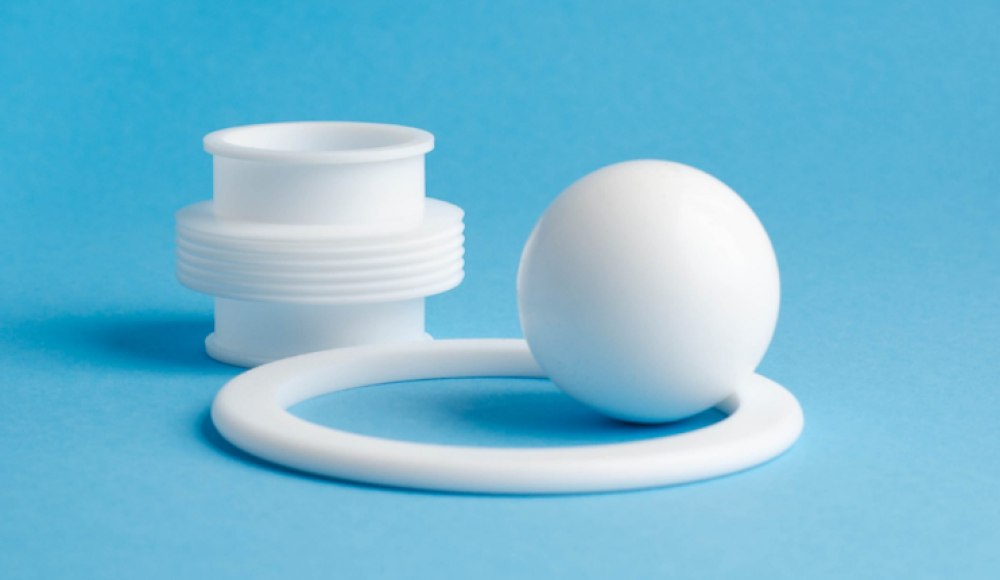
Teflon, commonly known as polytetrafluoroethylene (PTFE), is a synthetic polymer renowned for its non-stick properties. Developed by DuPont in 1938, Teflon has become ubiquitous in cookware, providing a slick, resistant surface ideal for cooking without food sticking. Its molecular structure, composed of carbon and fluorine atoms, renders it highly resistant to heat, chemicals, and corrosion, making it useful in a variety of industrial applications beyond the kitchen. Teflon’s versatility and durability have cemented its status as a go-to material for creating low-friction, non-stick surfaces in both consumer and industrial settings.
Characteristics of Teflon
Teflon possesses several notable characteristics:
Heat and Cold Resistant
Teflon can withstand high temperatures without significant degradation. It typically maintains its structural integrity and non-stick properties up to temperatures around 260°C (500°F). Also, teflon remains stable and retains its properties even at low temperatures. It can withstand extreme cold temperatures without becoming brittle or losing its flexibility. Teflon’s combination of heat and cold resistance contributes to its versatility and durability in a wide range of applications, from cookware to industrial and scientific uses.
Chemical Resistant
It is highly resistant to chemical reactions, making it suitable for use in corrosive environments and with various substances.
It’s Non-Stick and Water Resistant
Teflon’s surface has a remarkably low coefficient of friction, which prevents food and other substances from adhering to it. Teflon is highly hydrophobic, meaning it repels water. This property makes it resistant to water absorption, preventing moisture from penetrating its surface.
Low Friction
Teflon has a low coefficient of friction, reducing resistance to movement and making it valuable in applications where smooth, lubricated surfaces are needed.
High Dielectric Strength
Teflon possesses a high dielectric strength, which is a measure of its ability to withstand electric stress without breaking down or allowing electrical current to flow through it. This property makes Teflon an excellent insulating material, particularly in applications where electrical insulation is critical. Teflon’s high dielectric strength allows it to maintain its insulating properties even when subjected to high voltages, making it suitable for use in electrical cables, connectors, capacitors, and other electronic components. Additionally, its stability over a wide range of temperatures and resistance to moisture further enhance its effectiveness as an insulator in various electrical and electronic systems.
Lightweight
Teflon is lightweight yet durable, making it suitable for various engineering and manufacturing applications where weight is a concern.
History of Teflon
The history of Teflon begins in 1938 when it was accidentally discovered by a chemist named Roy Plunkett, who was working for DuPont at the time. Plunkett was conducting experiments with refrigerants when he stumbled upon a slippery white substance in one of his canisters. This substance turned out to be polytetrafluoroethylene (PTFE), which would later be trademarked as Teflon.
Four Types of Teflon
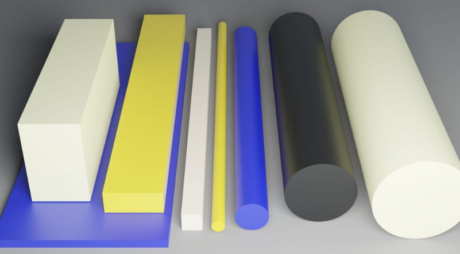
Overview of Different Forms and Grades of Teflon (e.g., PTFE, FEP, PFA, ETFE).
1. PTFE (Polytetrafluoroethylene)
PTFE is the original form of Teflon and is widely known for its exceptional non-stick properties, high temperature resistance, and chemical inertness.
It is commonly used as a coating for cookware, industrial equipment, seals, gaskets, and bearings.
PTFE comes in various grades optimized for different applications, such as mechanical, electrical, or chemical resistance.
2. FEP (Fluorinated Ethylene Propylene):
FEP is a copolymer of tetrafluoroethylene and hexafluoropropylene, offering similar properties to PTFE but with improved clarity and lower melting point.
It retains excellent non-stick properties and chemical resistance while being more flexible and easier to process.
FEP is often used for wire and cable insulation, tubing, and lining applications where transparency and flexibility are required.
3. PFA (Perfluoroalkoxy)
PFA is another fluoropolymer closely related to PTFE and FEP, combining high temperature resistance, chemical inertness, and improved flexibility.
It offers superior mechanical properties compared to PTFE and FEP and is often preferred for applications requiring enhanced toughness and thermal stability.
PFA is commonly used in semiconductor manufacturing, chemical processing, and medical applications where high purity and performance are essential.
4. ETFE (Ethylene Tetrafluoroethylene)
ETFE is a fluoropolymer known for its outstanding mechanical properties, excellent chemical resistance, and exceptional weatherability.
It is highly transparent, lightweight, and resistant to UV radiation, making it ideal for architectural membranes, greenhouse films, and outdoor coatings.
These different forms and grades of Teflon offer a range of properties suited to various applications, from cookware and industrial equipment to architectural structures and electrical components. The choice of Teflon type depends on factors such as temperature range, chemical exposure, mechanical requirements, and desired performance characteristics.
Structure of Teflon
The structure of Teflon is based on a repeating unit made up of carbon and fluorine atoms. Here’s an overview of its molecular structure:
Carbon backbone: The main structural element of PTFE is a long chain of carbon atoms. These carbon atoms form a backbone or skeleton of the polymer chain, providing stability and strength to the material.
Fluorine atoms: Each carbon atom in the backbone is bonded to two fluorine atoms. These fluorine atoms are highly electronegative, creating strong carbon-fluorine bonds that contribute to the material’s chemical stability and resistance to chemical reactions and breakdown.
Tetrafluoroethylene monomer: PTFE is synthesized from tetrafluoroethylene (TFE) monomers, which are small molecules containing four fluorine atoms bonded to a central carbon atom. Through a process called polymerization, these TFE monomers link together to form long chains of PTFE molecules.
Non-polar structure: The carbon-fluorine bonds in PTFE are highly symmetrical and non-polar, meaning that the distribution of electrons is uniform throughout the molecule. This non-polar structure gives PTFE its unique properties, such as low surface energy, high chemical resistance, and excellent non-stick properties.
Crystalline regions: In its solid state, PTFE exhibits crystalline regions where the polymer chains are neatly arranged and tightly packed together. These regions contribute to the material’s strength and rigidity.
Amorphous regions: PTFE also contains amorphous regions where the polymer chains are less ordered and more randomly arranged. These regions provide flexibility and contribute to the material’s ability to deform and stretch.
Overall, the unique molecular structure of PTFE, characterized by strong carbon-fluorine bonds and a highly symmetrical arrangement of atoms, gives rise to its exceptional properties, including high chemical resistance, low friction, and non-stick behavior.
Popular Industrial Applications of Teflon
Electronics
Teflon’s combination of electrical insulation, thermal stability, chemical resistance, and mechanical properties make it a valuable material in the design and manufacture of electronic devices, contributing to their performance, reliability, and longevity.
Semiconductors
Teflon is used in semiconductor manufacturing equipment, such as process chambers, wafer handling tools, and gas handling systems. Teflon’s chemical resistance and high-purity characteristics help minimize contamination and ensure the integrity of semiconductor materials and devices.
Automotive
Teflon coatings are applied to engine components such as piston rings, cylinder liners, and valve seats to reduce friction and wear, enhance fuel efficiency, and prolong engine lifespan. Teflon coatings also aid in preventing the build-up of deposits and improving overall engine performance.
Medical Equipment
Teflon is used in the construction of lab equipment such as syringes, pipettes, and test tubes due to its chemical resistance and inertness. Teflon components ensure accurate and reliable sample handling, measurement, and analysis in laboratory settings, contributing to the accuracy and reproducibility of experimental results.
Construction
Teflon-coated fiberglass membranes are commonly used in the construction of tensile membrane structures, such as stadiums, arenas, airports, and commercial buildings. Teflon membranes provide weatherproofing, UV protection, and durability while allowing natural light transmission and creating visually stunning architectural designs.
Chemical Field
Teflon is highly resistant to corrosion and chemical attack, making it suitable for the construction of storage tanks, piping, valves, and other equipment used in the storage and handling of corrosive chemicals. Teflon-lined vessels and piping systems help prevent chemical spills, leaks, and contamination, ensuring the safety and integrity of chemical processes.
Aerospace Industry
Teflon is used as insulation for wires, cables, and harnesses in aerospace electrical systems. Its excellent electrical insulation properties, resistance to heat, and durability make it ideal for protecting wiring in aircraft from damage and ensuring reliable electrical connections.
Applications of PTFE in Mechanical Engineering
PTFE’s low friction coefficient and self-lubricating properties make it ideal for bearings and bushings in various mechanical systems. PTFE bearings are used in automotive suspensions, industrial machinery, and aerospace applications to reduce friction, wear, and noise while improving efficiency and longevity.
Oil and Gas Industry
Teflon coatings and linings are applied to pipes, fittings, and valves to protect against corrosion, erosion, and fouling in oil and gas production, transportation, and refining processes. Teflon coatings provide a non-stick surface that repels deposits and reduces friction, improving flow efficiency and extending the lifespan of equipment.
Applications of PTFE in Food and Beverage Industry
PTFE is used in various food processing equipment components such as seals, gaskets, and conveyor belts due to its non-toxicity, chemical resistance, and high temperature tolerance. PTFE components ensure hygienic processing, prevent contamination, and withstand the rigorous conditions of food manufacturing.
Use of Teflon Coating in Cooking Utensils Making
Teflon coating is typically applied to the surface of cooking utensils through a process called spray coating or roller coating. The utensils are thoroughly cleaned and prepared to ensure proper adhesion of the Teflon coating. Then, a layer of liquid Teflon is sprayed or rolled onto the surface of the utensil. After application, the utensils are heated to a specific temperature to cure the Teflon coating and create a durable, non-stick surface.
Uses of Teflon in Making Personal Care Products
Teflon coatings are applied to the plates of hair straighteners, curling irons, and hot rollers to create smooth, non-stick surfaces that prevent hair from snagging or sticking during styling. Teflon-coated styling tools offer effortless gliding through the hair, reducing damage and enhancing styling results.
Manufacturing and Processing of Teflon
The manufacturing and processing of Teflon involves several steps:
- Polymerization: The process begins with the polymerization of tetrafluoroethylene (TFE) gas, a monomer derived from fluorite minerals. Polymerization is typically carried out via a high-pressure, free-radical polymerization process in the presence of a catalyst, such as a peroxide initiator. This reaction forms long chains of TFE molecules, resulting in the formation of PTFE resin.
- Powder production: The PTFE resin is cooled and ground into fine powder particles. The size and morphology of the powder particles can be controlled to tailor the properties of the final Teflon product.
- Compression molding: The PTFE powder is compressed into billets or preforms using hydraulic presses. Compression molding involves applying pressure and heat to the PTFE powder to form dense, uniform shapes. This process is commonly used to manufacture billets, rods, and sheets of Teflon.
- Extrusion: In extrusion processing, the PTFE powder is heated and forced through a die to form continuous shapes such as rods, tubes, and profiles. Extrusion allows for the production of Teflon products with consistent dimensions and mechanical properties.
- Paste extrusion: For specialized applications, such as wire insulation and tubing, paste extrusion is used. In this process, the PTFE powder is mixed with a lubricant to form a paste, which is then extruded through a die to form thin-walled tubes or coatings.
- Sintering: After shaping, the Teflon products are sintered in an oven at high temperatures (typically above 327°C or 620°F) to fuse the PTFE particles together and eliminate any residual lubricants or processing aids. Sintering results in the formation of a dense, solid structure with improved mechanical properties.
- Surface treatment: Depending on the application, Teflon products may undergo surface treatments such as etching or plasma treatment to enhance adhesion properties for bonding or coating applications.
- Coating application: Teflon coatings can be applied to various substrates using techniques such as spray coating, dip coating, or electrostatic coating. The coated substrates are then cured at high temperatures to bond the Teflon coating to the surface and form a durable, non-stick finish.
Common Methods of Shaping and Molding Teflon (e.g., Extrusion, Compression Molding).
Common methods of shaping and molding Teflon include:
Compression molding
Compression molding is a widely used method for shaping Teflon into various forms such as sheets, rods, and blocks. In this process, PTFE powder is placed into a mold cavity and compressed under high pressure and temperature using a hydraulic press. The heat and pressure cause the PTFE powder particles to fuse together, forming a dense and uniform product.
Extrusion
Extrusion is used to produce continuous lengths of Teflon profiles, tubes, and rods. In this process, PTFE resin is heated and forced through a die to form the desired shape. The extruded Teflon is then cooled and cut to the desired length. Extrusion allows for the production of complex shapes with consistent dimensions and mechanical properties.
Paste extrusion
Paste extrusion is a specialized extrusion process used to produce thin-walled tubes and coatings from PTFE paste. In this process, PTFE powder is mixed with a lubricant to form a paste, which is then extruded through a die to form the desired shape. Paste extrusion is commonly used in applications requiring thin, uniform coatings or tubing.
Isostatic molding
Isostatic molding, also known as isostatic pressing or cold isostatic pressing (CIP), is a forming method used to produce complex shapes and components from PTFE powder. In this process, PTFE powder is placed into a flexible mold and subjected to high pressure from all directions using a hydraulic press or fluid pressure. Isostatic molding allows for the production of near-net-shaped parts with uniform density and mechanical properties.
Injection molding
Injection molding is used to produce small, intricate parts and components from PTFE resin. In this process, PTFE resin is heated to a molten state and injected into a mold cavity under high pressure. The molten resin solidifies within the mold, forming the desired shape. Injection molding is commonly used in mass production of PTFE components for various industries.
Guidelines for Machining and Fabricating Teflon Parts
Machining and fabricating Teflon parts require careful consideration of the material’s unique properties to ensure optimal results. Here are some guidelines for machining and fabricating Teflon parts:
Tool Selection
Use sharp cutting tools made from carbide or high-speed steel when machining Teflon. Diamond-coated tools can also be effective for certain applications. Avoid using tools with a high rake angle, as they can cause excessive friction and heat buildup, leading to poor surface finish and tool wear.
Cutting Parameters
When machining Teflon, use low cutting speeds and feed rates to minimize heat generation and prevent melting or deformation of the material. Cutting speeds typically range from 50 to 200 surface feet per minute (SFPM), while feed rates should be kept low to prevent chip buildup and tool chatter.
Coolant and Lubrication
Teflon is a self-lubricating material and generally does not require additional lubrication during machining. However, using a small amount of water-based coolant or lubricant can help improve surface finish and chip evacuation, especially when machining large or complex parts.
Clamping and Fixturing
Use appropriate clamping and fixturing techniques to securely hold Teflon parts during machining. Avoid excessive clamping pressure, as it can cause distortion or deformation of the material. Soft jaws or clamping pads made from non-metallic materials can help prevent marring or scratching of Teflon surfaces.
Chip Evacuation
Ensure effective chip evacuation during machining to prevent chip buildup and tool damage. Use sharp chip-breaking tools or air blast systems to break and remove chips from the cutting area. Continuous or intermittent chip evacuation is essential to maintain machining accuracy and surface finish.
Surface Finish
Teflon has a low coefficient of friction and exhibits excellent surface finish characteristics. Use fine-grit sandpaper or polishing compounds to achieve the desired surface finish on Teflon parts. Avoid aggressive sanding or grinding, as it can cause surface damage or generate excessive heat.
Post-processing
After machining, deburr Teflon parts using manual deburring tools or abrasive blasting techniques. Remove any burrs or sharp edges to ensure the final part meets dimensional and cosmetic requirements.
Inspection and Quality Control
Perform dimensional and visual inspections of machined Teflon parts to verify compliance with specifications and quality standards. Use calibrated measuring instruments such as micrometers, calipers, and optical comparators to ensure accuracy and consistency.
By following these guidelines, machinists and fabricators can achieve high-quality results when machining and fabricating Teflon parts, ensuring optimal performance and reliability in various applications.
Is It Possible to Use Teflon Safely?
Yes, it is possible to use Teflon safely when proper precautions are taken. Teflon is considered safe for its intended applications, such as non-stick cookware, industrial components, and medical devices, when used within recommended temperature ranges and guidelines provided by manufacturers. However, overheating Teflon-coated cookware can lead to the release of fumes containing perfluorooctanoic acid (PFOA), which may pose health risks. To ensure safe use, it’s essential to follow manufacturer instructions, avoid overheating, and use ventilation in areas where Teflon is heated. Additionally, selecting Teflon products that are free from PFOA and other harmful additives can further enhance safety.
Conclusion
In conclusion, Teflon offers numerous advantages across various industries, including its non-stick properties, chemical resistance, high temperature tolerance, and electrical insulation. When used safely and in accordance with manufacturer guidelines, Teflon provides reliable performance and contributes to improved efficiency, durability, and safety in applications ranging from cookware and industrial equipment to medical devices and electronics. However, it’s important to take precautions to avoid overheating and exposure to harmful fumes, ensuring the safe use of Teflon products. Overall, Teflon remains a valuable and versatile material that continues to play a significant role in modern manufacturing and technology.
Contact us if need to know more about it.