
Introduction
Die casting is a highly efficient and precise manufacturing process used to create intricate metal parts and components. At the heart of successful die casting lies the mold tooling, a critical element that influences the quality and efficiency of the entire operation. In this guide, we will explore the importance of mold tooling in die casting, delve into the components of die casting molds, discuss various types of molds and outline the mold design process for die casting.
Why is Mold Important for Die Casting?
Die casting molds are the backbone of the die casting process, playing a crucial role in ensuring the production of high-quality parts. Here’s why mold tooling is so important in die casting:
1. Precision and Repeatability:
Molds dictate the accuracy and consistency of the cast parts, ensuring they meet strict tolerances.
2. Efficiency:
Well-designed molds can increase production rates, reducing costs per unit.
3. Durability:
High-quality molds can withstand the rigors of high-pressure casting, ensuring a longer tooling life.
4. Quality Control:
Molds enable better control over the casting process, resulting in fewer defects and scrap parts.
Die Casting Mold Components
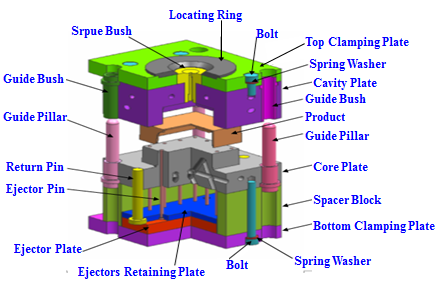
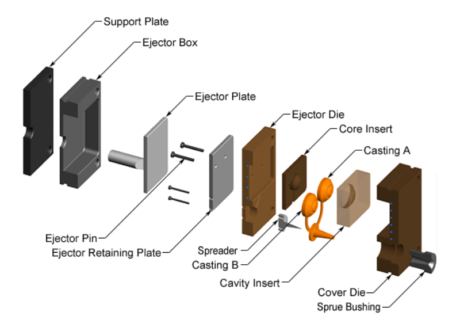
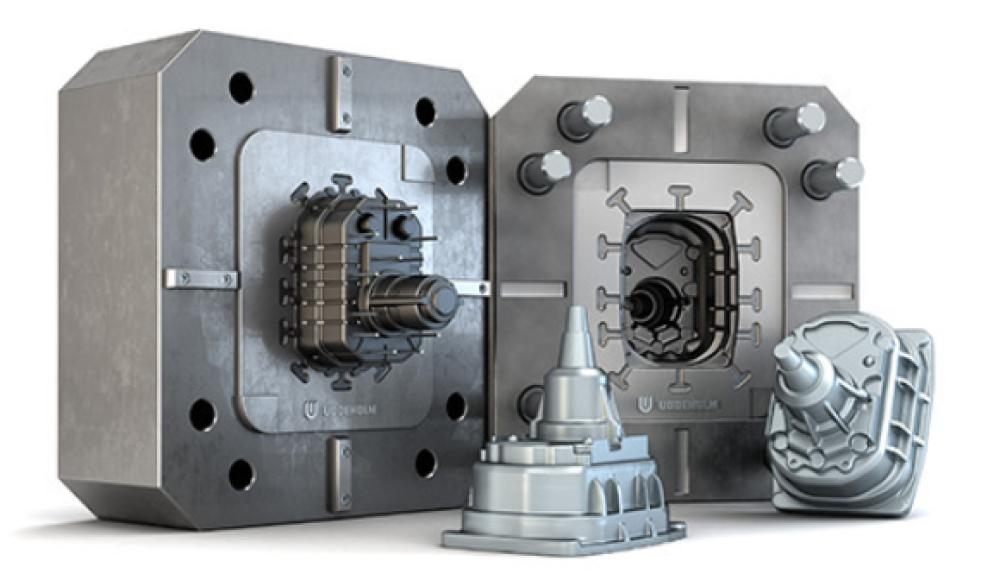
A die casting mold consists of several key components, each serving a specific purpose in the casting process:
1. Molding System
The molding system includes the mold cavity, where the metal is injected, and the core, which shapes the final part.
2. Mold Base System
This forms the foundation of the mold, providing structural support and alignment for the other components.
3. Ejection System
The ejection system helps remove the cast part from the mold after solidification.
4. Runner System
The runner system channels molten metal from the injection system into the mold cavity.
5. Overflow System
The overflow system manages excess metal and prevents air from entering the mold.
Types of Die Casting Molds
Die casting molds come in various types, tailored to different stages of production and specific applications. Here are the most common types:
1. Prototyping Dies
Used for initial testing and development of parts. These are often temporary and may not require the precision of production dies.
2. Tooling Dies
These are the primary molds used for mass production. They are designed for durability and precision.
3. Production Dies
Similar to tooling dies but may include multiple cavities for higher production rates.
4. Unit Dies
Versatile, modular molds that allow for quick die changeovers. They are ideal for small to medium production runs with various part sizes.
5. Trim Dies
Used for trimming excess material from the cast parts, ensuring a clean and precise final product.
Mold Design Process for Die Casting
The design of die casting molds is a critical phase that significantly impacts the efficiency and quality of the entire manufacturing process. Here are the key aspects to consider in mold design:
1. Number of Cavities
Determining the number of cavities in the mold affects production rates. More cavities can increase productivity, but they require careful consideration to maintain quality.
2. Projection Area
The projection area of the die must be large enough to accommodate the part while considering draft angles and ejector mechanisms.
3. Volume and Shape of the Die
Mold design should account for the volume of molten metal required and the specific part geometry.
Factors to Consider for Making Perfect Die Casting Tooling
Achieving the perfect die casting tooling involves considering factors like mold material selection, temperature control, and proper venting to minimize defects and ensure consistent part quality.
Creating the perfect die casting tooling is essential for ensuring the quality and efficiency of the die casting process. Here are the key factors to consider when designing and manufacturing die casting tooling:
1. Mold Material Selection
Choosing the right material for the mold is critical. Common materials include tool steel, h13, and h11. The choice depends on factors like the expected production volume, part material, and the required mold life.
2. Temperature Control
Maintaining proper temperature control within the mold is vital. The right temperature ensures consistent casting quality and reduces the risk of defects. Temperature control mechanisms like cooling channels or heaters must be integrated into the mold design.
3. Venting
Proper venting is crucial for releasing trapped air and gases during the casting process. Inadequate venting can lead to porosity and defects in the final part.
4. Lubrication and Maintenance
Incorporating features for mold lubrication and ease of maintenance is essential. Well-lubricated molds reduce wear and extend tooling life. Additionally, ensuring ease of access for cleaning and maintenance simplifies upkeep.
5. Draft Angles
Draft angles are included in the design to facilitate easy part ejection from the mold. The angle allows the part to release without damaging the mold or the part itself.
6. Ejector Mechanisms
Proper ejector mechanisms are essential for removing the cast part from the mold after solidification. These mechanisms should be carefully designed to avoid part damage.
7. Parting Lines
The parting line is the separation point of the mold halves. It must be precisely aligned to ensure that the two halves match seamlessly and consistently.
8. Runner and Gate Design
The design of the runner and gate system affects the flow of molten metal into the mold cavity. The size, shape, and location of the gate are critical to avoid defects like turbulence and air entrapment.
9. Tolerances and Surface Finish
Define the required tolerances and surface finish for the cast part. The mold design should accommodate these specifications and ensure that the final part meets quality standards.
10. Part Geometry and Complexity
The complexity of the part’s geometry influences the mold design. Intricate parts may require multiple slides or cores to achieve the desired shape. Understanding the part’s geometry is crucial for accurate tooling design.
11. Prototype and Testing
It’s often beneficial to create prototypes or conduct testing before committing to full-scale production tooling. This allows for adjustments and improvements to the tooling design based on actual performance.
12. Cost Considerations
While pursuing perfection in tooling design, it’s important to balance this with cost considerations. Assess the trade-offs between tooling cost and the quality and efficiency it provides.
13. Material Compatibility
Ensure that the mold material is compatible with the type of material being cast. Some materials may require specialized coatings or treatments to prevent material adhesion or wear.
14. Expertise and Collaboration
Collaborate with experienced mold designers and manufacturers. Their expertise can help navigate the complexities of tooling design, ensuring that the final product is of the highest quality.
Conclusion
Die casting is a highly efficient manufacturing process that relies on well-designed and precise die casting molds. Understanding the importance of mold tooling, the components of die casting molds, the various types of molds, and the critical mold design process is crucial for achieving high-quality, cost-effective production of metal parts and components. Whether you’re producing prototypes, large production runs, or require versatile mold options, proper mold tooling is the key to success in die casting.