
A Pressure Die Casting Overview
Pressure die casting is a prominent technique in the field of metal manufacturing, renowned for its accuracy and effectiveness. The purpose, methods, and significant differences between hot and cold chamber die casting are all covered in this article that delves into the complexities of pressure die casting.
The Purpose of Pressure Die Casting and Its Significance
The fundamental goal of pressure die casting is to produce exquisite, precisely crafted metal parts. This process aims to deliver components with precise dimensions, smooth surfaces, and tight tolerances it goes beyond simple manufacturing.
Pressure Die Casting Parts Manufacturing
Pressure die casting is used in many different industries and yields a wide range of parts. This process guarantees the effective production of highly complex and intricate parts, ranging from consumer electronics and industrial machinery to automotive components.
Tools Utilized in Pressure Die Casting
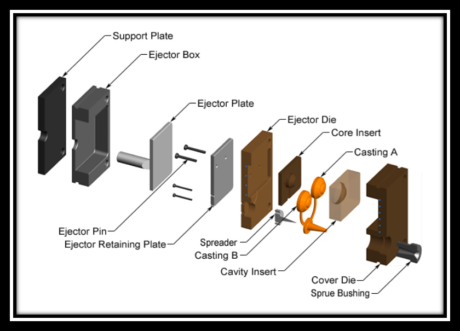
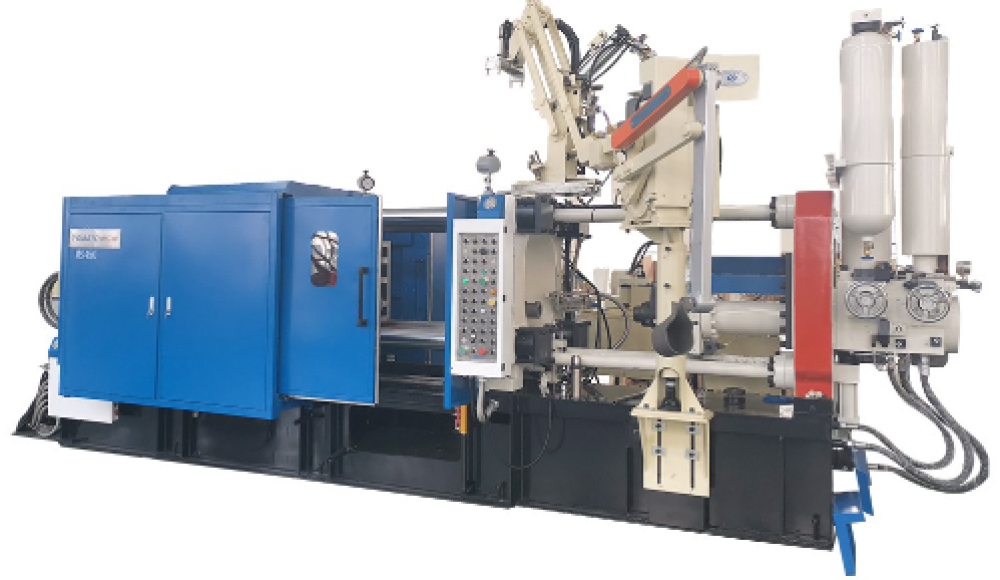
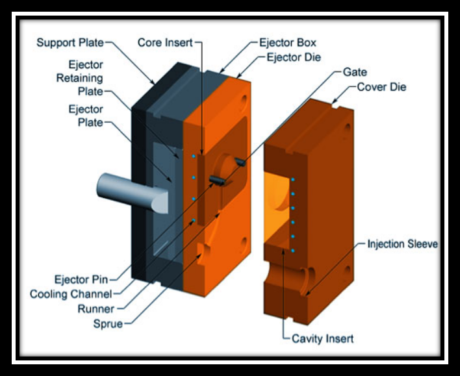
Specialized tools are used in pressure die casting to attain the necessary precision. Die casting machines, trim dies, and dies or molds work together to seamlessly create intricately designed components.
Pressure Die Casting Advantages
There are several benefits to pressure die casting. It is a favored option in manufacturing due to its effectiveness in high-volume production, accuracy in fine detailing, and adaptability in handling different metals.
Hot Chamber Die Casting
Melted metal is injected into the mold inside the machine during hot chamber die casting. Zinc and magnesium are two examples of lower melting point metals that work well with this process.
Use Cases and Applications
Smaller, more detailed parts are expertly produced by hot chamber die casting. Precision is crucial in a variety of applications, such as consumer electronics and automotive parts.
Cold Chamber Die Casting
This process involves pouring molten metal into the cold chamber of the apparatus and then injecting it into the mold. Brass and aluminum, two metals with higher melting points, are perfect candidates for this technique.
Industries Benefiting from Cold Chamber Die Casting
Cold chamber die casting is the go-to method for manufacturing larger and sturdier components. Industries such as automotive and heavy machinery rely on this process for robust parts.
Key Differences Between Hot and Cold Chamber Die Casting
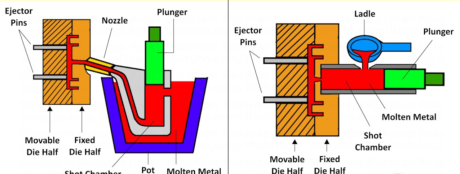
Hot Chamber Cold Chamber
Understanding the disparities between hot and cold chamber die casting is crucial for choosing the appropriate method based on specific requirements. The differences encompass metal suitability, process complexity, applications, tooling, and cycle time.
Comparative Table: Hot Vs. Cold Chamber Die Casting
| ASPECT | HOT CHAMBER DIE CASTING | COLD CHAMBER DIE CASTING |
| Metal Suitability | Ideal for low melting point metals (e.g., zinc) | Suited for high melting point metals (e.g., aluminum) |
| Process Complexity | Less complex due to immediate molten metal | More complex, involving ladling and injection |
| Applications | Small and intricate components | Larger and robust components |
| Tooling and Maintenance | Tools may wear faster due to hot metal injection | Tools generally experience less wear |
| Cycle Time | Faster cycle times | Slightly longer cycle times |
Advancements and Innovations in Pressure Die Casting
As technology advances, pressure die casting is no exception. Innovations in materials, automation, and digital technologies are reshaping the landscape, further enhancing the efficiency and capabilities of the process.
Challenges in Pressure Die Casting
Despite its merits, pressure die casting is not without challenges. Issues like porosity and mold degradation pose ongoing challenges that manufacturers actively address through continuous research and development.
Sustainability in Pressure Die Casting
Sustainability is becoming a key focus in the pressure die casting industry. The shift towards eco-friendly manufacturing involves practices such as energy conservation and the recycling of scrap metal.
Prospects for Pressure Die Casting Technology in the Future
Exciting prospects lie ahead for pressure die casting. Artificial intelligence and material innovations are just two examples of the revolutionary changes the industry is about to undergo, which will further improve accuracy and efficiency.
Conclusion
To summarize, pressure die casting plays a crucial role in modern manufacturing by offering precision, efficiency, and versatility. A manufacturer’s ability to make well-informed decisions is enhanced by knowing the subtle differences between hot and cold chamber die casting.
FAQs
1. Is Pressure Die Casting Suitable for Small-Scale Production?
While pressure die casting is most cost-effective for large-scale production due to initial tooling expenses, it can still be used for smaller quantities.
2. What are the Commonly Used Materials in Pressure Die Casting?
Aluminum, zinc, and magnesium are frequently used in pressure die casting due to their excellent casting properties.1. Q: Is small-scale production appropriate for pressure die casting?
3. Is it Possible to Manufacture Heat-Resistant Parts Using Pressure Die Casting?
Yes, pressure die casting is capable of producing heat-resistant parts, especially when high melting point alloys are used.
4. How Long does it Take to Set Up A Pressure Die Casting Operation?
Launching a pressure die casting business can take various forms, but it typically involves creating molds, buying equipment, and implementing quality control procedures.
5. Can recycled metal be utilized in pressure die casting?
Yes, recycled metal can be used in pressure die casting, which promotes environmentally friendly and sustainable manufacturing methods.
2 thoughts on “The Comprehensive Guide to Pressure Die Casting and Its Chamber Variants”