
In materials science, two heroes battle it out in the quest for structural integrity: Stress and Strain. Like Yin and Yang, they’re intertwined yet distinctly different. Ever wondered why bridges don’t collapse under the weight of rush-hour traffic or how skyscrapers withstand howling winds? The answer lies in understanding these two fundamental concepts.
In this article, we’ll unravel:
- What Is Stress? – The unseen force in materials.
- What Is Strain? – The silent response to stress.
- Key Differences between Stress and Strain – Unveiling their unique roles.
- And much more…
P.S. Think of Stress and Strain as the dynamic duo of engineering. They’re the reason buildings stand tall, and airplanes fly high. Let’s dive into their world and discover how they keep our world safely humming along.
What is Stress?
Stress is defined as the internal force per unit area within a material that arises due to externally applied forces. It quantifies the intensity of internal forces acting within a material. The equation for stress is: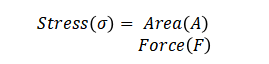
Where:
- σis the stress,
- F stands for the force that’s applied,
- A represents the area where this force is spread out.
Imagine you’re pushing against a wall. You’re exerting force, but the wall isn’t moving. In the world of materials science, this is what we call stress. Stress is essentially the internal force per unit area that a material feels when an external force is at play. Stress is like the silent warrior within materials, battling to maintain integrity under pressure.
Stress is all about balance. When a force is applied to a material, stress distributes this force throughout the material, trying to restore equilibrium. It’s a bit like a game of tug-of-war at the molecular level. The material either deforms, withstands, or breaks under this stress, depending on its properties.
Why should we care about stress in materials? Well, it’s crucial for safety and design. Engineers need to understand stress to predict how materials will behave under different forces. This understanding is vital in constructing buildings, bridges, and vehicles that are safe and durable. For instance, the Golden Gate Bridge in San Francisco is designed to withstand wind, weight, and even earthquakes, thanks to meticulous stress calculations.
Measuring Stress
Wondering how to measure this unseen force? Stress is usually quantified in pascals (Pa) or pounds per square inch (psi). Engineers have their tricks, like using strain gauges to see how much a material stretches or compresses under stress. These insights are crucial for figuring out a material’s ‘elastic limit’ – that’s, the maximum stress it can handle before it changes shape for good.
In essence, stress is the unsung hero in materials. It’s the force that keeps our structures standing and our machines running. By understanding and measuring it, we ensure that the world around us remains safe and functional.
Types of Stress
Each type of stress plays a unique role in how materials behave under different conditions.
- Normal Stress: This type of stress hits a material perpendicularly. Picture pushing your hand against a wall – that’s normal stress. It comes mainly in two flavors: tensile and compressive.
- Longitudinal Stress: This is a kind of normal stress that works along a material’s length. Think about stretching a rubber band; the stress along its length is longitudinal. It’s key to understanding how materials stretch or shrink under stress.
- Tensile Stress:A part of normal stress, tensile stress happens when a material is being pulled apart. Imagine the stress on a rope during a tug-of-war. That’s tensile stress. Knowing this helps us figure out a material’s tensile strength – the maximum stress it can take before snapping.
- Compression Stress: Now, this is the opposite of tensile stress. It’s all about squashing or compressing a material. It’s like the stress your chair experiences under your weight. Engineers need to understand compression stress to ensure structures can support loads without buckling or crushing.
- Bulk Stress: Bulk stress, also known as volume stress, occurs when an object is subjected to uniform pressure in all directions. This is commonly seen in fluids. For example, the pressure exerted on a submarine as it dives deeper into the ocean is a form of bulk stress. It’s vital to understand how materials respond to pressure changes, especially in hydraulic systems.
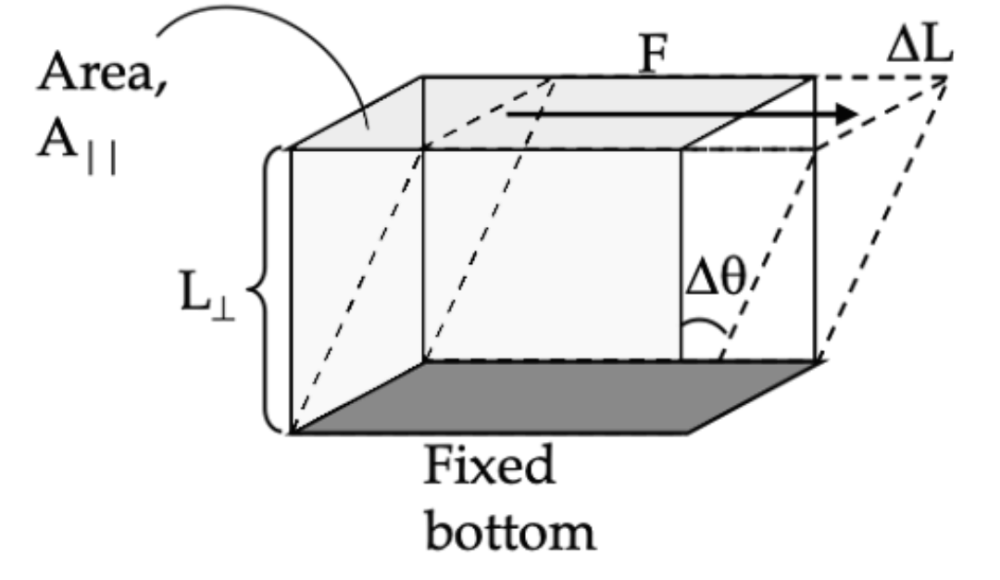
- Shear Stress: Last but not least, shear stress acts parallel to the surface of a material. It’s like the stress experienced by a pair of scissors cutting through paper. Shear stress is critical in understanding how materials will respond to forces that cause them to slide over each other. This type of stress is a key factor in designing gears and bolts, ensuring they can handle the sliding forces they encounter.
Each type of stress plays a pivotal role in the design and analysis of materials. By understanding these different stresses, engineers can predict how materials will behave under various forces, leading to safer and more efficient designs.
What are the Benefits of Stress?
While the word ‘stress’ often carries a negative connotation, in the world of materials science and engineering, it’s a cornerstone of innovation and safety. Grasping stress goes beyond just dodging failure. It’s about elevating performance, boosting safety, and breaking new ground in design and material science. Let’s dive into the tangible perks of stress analysis.
Design of Structures
The design of structures has been revolutionized by the understanding of stress. Take the iconic Eiffel Tower in Paris. Its design was heavily influenced by stress analysis, allowing it to withstand wind forces and weight distribution effectively.
Another marvel, the Burj Khalifa in Dubai, stands as the world’s tallest building, thanks in part to sophisticated stress calculations. These calculations ensured that each steel and concrete component could handle the immense stresses of such a towering structure, from its foundation to its spire.
Material Selection
Material selection is critical in engineering, and stress analysis plays a key role. The choice of materials for the Golden Gate Bridge, for instance, was heavily influenced by stress considerations. The bridge’s ability to withstand not just the usual stresses of traffic and wind but also the additional stress of potential earthquakes was a major factor in selecting its steel and suspension design.
This kind of informed material selection extends the lifespan of structures and ensures their resilience under various stress conditions.
Failure Analysis
Understanding stress is crucial in failure analysis, which helps in learning from past mistakes to avoid future catastrophes. The collapse of the Tacoma Narrows Bridge in 1940 is a classic example. The bridge, nicknamed “Galloping Gertie,” was vulnerable to aerodynamic flutter due to insufficient stress analysis. This disaster led to significant advancements in our understanding of wind-induced stress and its effects on structures, fundamentally changing bridge design.
Quality Control
In quality control, stress analysis ensures that products meet the required standards and can withstand expected stresses. For instance, in the aerospace industry, stress analysis is used to test aircraft components.
The wings of an Airbus A380, the world’s largest passenger airliner, undergo rigorous stress testing to ensure they can withstand extreme forces. This not only guarantees the safety of passengers but also enhances the aircraft’s efficiency and lifespan.
Safety
The most direct benefit of stress analysis is safety. The design of automotive safety features, such as crumple zones in cars, is a prime example. These zones are designed to absorb the stress of an impact, reducing the force transmitted to passengers.
This application of stress analysis has saved countless lives and continues to be a key factor in automotive design.
The Lowdown on Strain
Strain is all about how much a material warps under stress. It’s the degree to which stress can reshape something. The equation for strain is:

Where:
- ϵis the strain,
- ΔLis the change in dimension (such as length),
- L0 is the original dimension of the material.
Strain is the unsung hero in material science’s tango with stress. While stress is the push, strain is the material’s comeback – the extent of its twist and turn in response to that push. It’s a microscopic saga of bending without breaking.
Getting a handle on strain is key. It lets engineers and boffins predict how materials will hold up under different kinds of stress. For instance, when designing a new airplane, engineers must know not only the stress that different parts of the plane will endure but also how these parts will strain or deform under these stresses. This knowledge is vital for ensuring the plane is both strong and flexible enough to withstand the rigors of flight.
Strain’s also crucial in figuring out how far we can push materials. Take bridge building, for example. Knowing how materials strain helps pick the right stuff and design, ensuring the bridge can take a bit of bending with loads and temperature shifts without falling apart.
Measuring Strain
Measuring strain gives us a window into the behavior of materials under stress. This measurement is typically expressed as a dimensionless ratio or percentage. It describes the extent of deformation compared to the original size of the material.
One common method of measuring strain is through strain gauges. These devices are attached to the surface of a material and measure how much it stretches or compresses under stress. The data collected from strain gauges can be used to calculate the strain and help in predicting how the material will behave under different conditions.
For instance, in the aerospace industry, strain gauges are used extensively to test aircraft components. The wings and fuselage of an aircraft are subjected to various stresses during flight, and understanding how these parts strain under these stresses is crucial for safety and performance.
How does a Strain in Materials Work?

Strain in materials is a core idea for understanding how they change shape under stress. It’s all about how much a material moves in response to stress. Let’s unpack strain’s main acts: Elastic Deformation, Plastic Deformation, and Fracture.
Elastic Deformation
Elastic deformation is the first act of change, where materials snap back to their original form once the stress is gone. Hooke’s Law runs this show, saying that strain is in step with applied stress, but only up to a point. Picture a rubber band snapping back after you let go.
This is a perfect example of elastic deformation. The material’s ability to withstand elastic deformation is quantified by Young’s Elastic Modulus, a property that varies widely among different materials. For example, steel has a high Young’s Modulus, indicating its high resistance to elastic deformation.
Plastic Deformation
When the stress exceeds a material’s elastic limit, it undergoes plastic deformation. This is a permanent deformation that remains even after the stress is removed. During plastic deformation, the material’s structure changes at the atomic level.
This phenomenon is crucial in processes like metal forging and bending. An everyday example is bending a paperclip. Initially, it bends elastically but quickly moves into plastic deformation, retaining its bent shape even when the force is removed.
Fracture
Fracture is when materials reach their breaking point under stress. It happens when they’re pushed past their plastic deformation limit. Fracture strain tells us how much a material can bend before it breaks. Ductile metals, for instance, can take a lot of bending before they snap, while brittle stuff like glass breaks with hardly any bend.
Knowing about fracture strain is super important in fields where a material’s failure is not an option, like in aerospace or building skyscrapers.
Exploring Strain Types
Strain, a key indicator of how materials deform under stress, comes in different flavors. For engineers and scientists, getting to grips with these varieties is vital for crafting and scrutinizing structures and materials. Let’s explore the three main types: Longitudinal Strain, Volumetric Strain, and Shear Strain.
- Longitudinal Strain:This happens when a material stretches or compresses along its length. It’s about how much the length changes relative to the original length. Imagine pulling a spring; the lengthening of the spring under tension is a classic example of longitudinal strain. This type of strain is critical in applications where materials are subjected to tensile or compressive forces, such as in beams of buildings or the cables of suspension bridges. The ability of a material to withstand longitudinal strain without failing is a key factor in its selection for such applications.
- Volumetric Strain:Here, we’re talking about how the volume of a material shifts when stressed. It’s the ratio of the change in volume to the original volume. This type of strain is particularly important in the study of fluids and porous materials. For instance, when a sponge is squeezed, the reduction in its volume represents volumetric strain. In geological studies, understanding volumetric strain helps in predicting changes in Earth’s crust due to seismic activities. In engineering, it’s crucial for designing hydraulic systems and assessing the stability of structures under pressure.
- Shear Strain:Shear strain occurs when the deformation is due to forces applied parallel to the surface of a material, causing it to distort. Imagine a deck of cards where the top half is pushed sideways relative to the bottom half; the displacement of the layers is a representation of shear strain. This type of strain is a key consideration in the design of shafts in machinery, where torsional forces cause shear strain, and in the development of safety measures for buildings to withstand lateral forces like wind or earthquakes.
Each strain type sheds light on material behavior under various stress scenarios. By understanding these strains, engineers can predict how structures and materials will react to forces, ensuring safety, efficiency, and longevity in their designs.
The Upsides of Strain
Strain, a fundamental concept in materials science, plays a pivotal role in various fields, from engineering to quality control. Understanding strain helps not only predict material behavior but also enhance the design and safety of structures and products.
Design and Optimization of Structures
The understanding of strain is crucial in the design and optimization of structures. This knowledge empowers engineers to design structures that can take on different forces without bending out of shape too much.
- Bridges: The design of suspension bridges, like the Golden Gate Bridge, relies heavily on understanding strain. Engineers calculate the strain that cables will experience under different loads to ensure they can support the bridge without excessive stretching.
- Aircraft: In aircraft design, understanding strain is vital for wing construction. The wings must withstand significant strain during takeoff, flight, and landing without deforming or failing.
Quality Control and Testing
Strain measurement is a key component in quality control and testing, ensuring products meet safety and performance standards.
- Automotive Industry: Crash tests involve measuring the strain on different parts of a vehicle to ensure they deform in a way that protects passengers.
- Consumer Electronics: In devices like smartphones, strain tests are conducted to ensure screens and bodies can withstand bending and dropping.
Material Characterization
By analyzing strain, we get better at pinpointing material traits, paving the way for creating new materials with specific qualities.
- Graphene: Known for its exceptional strength and flexibility, graphene’s properties were extensively studied through strain analysis, leading to its use in various high-tech applications.
- Biomedical Materials: In biomedical engineering, materials like stents and artificial joints are selected based on their strain characteristics to ensure compatibility with human tissue and movement.
Failure Analysis
Understanding strain is essential in failure analysis, helping to prevent accidents and improve safety.
- Building Collapses: Analyzing the strain on building materials can reveal the causes of structural failures, leading to improved construction practices.
- Machinery Breakdowns: In industrial settings, failure analysis of strained components helps in identifying weak points in machinery, preventing costly breakdowns.
Stress vs. Strain: The Key Distinctions
Grasping the differences between stress and strain is a cornerstone in materials science and engineering. These concepts, while related, have distinct characteristics. Let’s break down their differences in a detailed table format:
| Aspect | Stress | Strain |
| Definition | Stress is the internal force per unit area within a material that arises due to externally applied forces. | Strain is the measure of deformation of a material as a result of the applied stress. |
| Units | Measured in units of pressure such as Pascals (Pa) or pounds per square inch (psi). | Dimensionless (a ratio), hence has no units. |
| Types | Stress includes types like normal (tensile and compressive), shear, and bulk stress. | Includes longitudinal strain, volumetric strain, and shear strain. |
| Measurement | Stress is calculated by dividing the force by the area over which it is applied. | Strain is calculated as the change in dimension divided by the original dimension of the material. |
| Physical Meaning | Stress quantifies the intensity of internal forces acting within a material. | Strain describes the extent of deformation caused by the applied stress. |
| Elasticity Relation | Stress is directly proportional to strain in the elastic region of a material, as per Hooke’s Law. | Strain is the result of the applied stress within the elastic limits of the material. |
| Dependency | Stress depends on the external force applied and the area of application. | Strain depends on the material’s response to stress and its deformation characteristics. |
This table highlights the fundamental differences between stress and strain, providing a clear distinction between these two key concepts in materials science. Understanding these differences is essential for engineers and scientists in designing and analyzing materials and structures under various load conditions.
Examples of Stress and Strain in Different Materials
In the realm of materials science, stress and strain are universal concepts, yet they manifest differently across various materials.
Metals
Metals stand out for their robustness, flexibility, and stretchability, making them a top choice for diverse uses. Here’s how stress and strain typically manifest in metals:
- Stress in Metals: When a metal is subjected to a force, it experiences stress that can lead to either elastic or plastic deformation. For instance, the stress on steel beams under load in a building is a prime example. These beams will experience compressive stress that they must withstand without deforming.
- Strain in Metals: Metals typically exhibit noticeable strain under stress. For example, the elongation of copper wire when pulled is a clear demonstration of tensile strain. Metals like steel can also show significant strain under compressive forces, such as in the pillars of bridges.
Polymers
Polymers, including plastics and rubbers, are known for their versatility and range from rigid to highly elastic materials. Their stress and strain characteristics are quite distinct from metals:
- Stress in Polymers: Polymers experience stress differently due to their molecular structure. For example, when a plastic container is squeezed, the stress can cause the polymer chains to realign. The stress experienced by a rubber band when stretched is another example, where the polymer chains uncoil and align in the direction of the force.
- Strain in Polymers: The strain in polymers can be quite varied. Rigid plastics may show minimal strain before breaking, while elastomers (like rubber) can exhibit extreme strains. Take a rubber band, for example. It can stretch multiple times its original length (high strain) before it snaps.
The Interplay of Stress and Strain
Grasping how stress and strain work together is key in materials science and engineering. More than just theory, this relationship is a practical tool for predicting material behavior under different loads and conditions. Let’s dive into the nitty-gritty, exploring the technicalities and real-world examples that show the connection between stress and strain.
The Basic Relationship
At the heart of it, the stress (σ) and strain (ε) relationship is captured by Hooke’s Law in a material’s elastic region. This law tells us that stress is directly proportional to strain until we hit the material’s elastic limit. Mathematically, it’s expressed as:
Where:
- σis the stress,
- Eis the Young’s Modulus of the material (a measure of its stiffness),
- ϵis the strain.
Young’s Modulus: The Key Factor
Young’s Modulus (E) is a critical factor in this relationship. It’s a constant for a given material and quantifies its stiffness. For instance:
- Steel has a high Young’s Modulus (approximately 200 GPa), indicating it’s much stiffer than rubber, which has a Young’s Modulus of about 01 to 0.1 GPa.
- The higher the Young’s Modulus, the more stress is required to produce a given amount of strain.
Elastic Vs Plastic Deformation
- Elastic Deformation: In this stage, the material snaps back to its original shape once the stress is gone. The stress-strain relationship here is linear, following Hooke’s Law.
- Plastic Deformation: Past the elastic limit, the material permanently changes shape. Here, the stress-strain curve goes non-linear. Removing the stress won’t revert the material to its original form.
Stress-Strain Curve
The stress-strain curve visually maps out this relationship. Key points on this curve include:
- Proportional Limit: The threshold where the stress-strain curve remains linear.
- Elastic Limit: The highest stress a material can handle without lasting changes.
- Yield Strength: The point where a material starts to undergo plastic deformation.
- Ultimate Strength: The peak stress a material can endure.
- Fracture Point: The point at which the material breaks.
Real-World Applications
In practical applications, understanding the stress-strain relationship helps in:
- Designing Structures: It’s all about ensuring materials act as expected under typical load scenarios.
- Material Selection: Picking materials with the right stress-strain traits for specific jobs.
- Safety Analysis: Assessing how much stress a material can take before it’s a safety risk.
What Comes First, Strain or Stress?

The question of what comes first, stress or strain, is a bit like the classic “chicken or egg” conundrum in materials science. To address this, we need to delve into the nature of these phenomena and how they interact in the context of material deformation.
When external forces act on a material, stress is the first response. It’s the force per unit area within the material, essentially its way of pushing back against the applied force. Stress quantifies the external load acting on the material. Strain, conversely, is the material’s deformation or shift in response to this stress. It’s the outcome of the applied stress, showing how the material’s dimensions change.
Think of it like compressing or stretching a spring – that’s the sequence of stress and strain in action. The compression or stretching of the spring (strain) is a response to your push (stress). In this scenario, the stress caused by your push comes first, and the strain (deformation of the spring) follows.
However, it’s important to note that in practical scenarios, the occurrence of stress and strain is almost instantaneous and happens concurrently. As soon as a force hits a material, it simultaneously builds up internal stress to resist the force and experiences strain as it reshapes under the load.
In engineering and materials science, understanding this interplay is key for designing and analyzing materials and structures. Engineers gauge the expected stress on a material in a specific scenario and then figure out how much strain it can handle before it gives way. This helps in selecting the right material for the right application, ensuring safety and functionality.
Decoding the Stress-Strain Curve
The Stress-Strain Curve is a visual guide that maps out the stress-strain relationship in a material under tension. It’s an essential tool in materials science and engineering, shedding light on a material’s mechanical characteristics. The curve plots stress on the vertical axis and strain on the horizontal axis.
Characteristics of the Stress-Strain Curve
- Initial Linear Portion: The curve starts with a linear section where stress and strain are directly proportional. This linear relationship follows Hooke’s Law, and the slope of this linear portion is known as Young’s Modulus (E). For example, a steel material with a high Young’s Modulus (around 200 GPa) will have a steeper slope compared to a softer material like rubber.
- Yield Point: The point on the curve where it deviates from linearity is known as the yield point. This point marks where a material starts to deform permanently. Past this, the material won’t revert to its original shape after the load is lifted. The yield strength is a critical design parameter, especially in structural engineering.
- Ultimate Strength: The curve’s peak signifies the maximum stress a material can bear before it fails. This is known as the ultimate tensile strength. Beyond this point, the material will start to neck and eventually fracture.
- Fracture Point: The point where the curve dramatically drops represents the fracture point of the material, indicating failure.
The Curve’s Phases
- Elastic Region: The initial, linear part of the curve, where the material will return to its original shape upon unloading.
- Plastic Region: After the yield point, the curve becomes nonlinear. Here, the material undergoes permanent deformation.
- Strain Hardening Region: As the curve approaches the ultimate strength, the material undergoes strain hardening, where it becomes stronger but less ductile.
- Necking and Fracture: After reaching the ultimate strength, the material starts to neck (localize deformation) and eventually fractures.
Graphical Representation
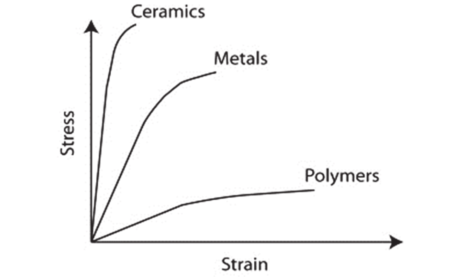
Applications of the Stress-Strain Curve
- Material Selection: By analyzing the curve, engineers can select appropriate materials for specific applications based on their mechanical properties.
- Predicting Material Behavior: The curve helps predict how a material will behave under different loading conditions, which is crucial for design and safety analysis.
- Quality Control: In manufacturing, the stress-strain curve is crucial for quality control, ensuring materials meet the necessary strength and ductility standards.
FAQs
Is Stress the Root of Strain?
Absolutely, stress is the precursor to strain in materials. When an external force is applied, it generates stress within the material, leading to deformation or strain. The stress-strain relationship is fundamental in understanding material responses to external forces.
Stress (σ) is the force per unit area, while strain (ε) is the change ratio in a material’s dimensions. Stress causes the material’s molecules or atoms to shift, resulting in deformation or strain.
The proportionality of stress to strain in the elastic region of a material is defined by Young’s Modulus (E), a material-specific constant. For example, Young’s Modulus for steel is approximately 200 GPa, indicating that a higher stress is required to cause a noticeable strain in steel compared to a more flexible material like rubber.
Can Stress Reshape a Material?
Absolutely, stress can cause a material to deform or change shape. The type and extent of deformation depend on the stress type and the material’s characteristics.
- Types of Deformation: Stress can lead to various deformations like stretching, compressing, bending, twisting, and shearing. For example, tensile stress elongates a material, while compressive stress shortens it.
- Material Properties: The degree of deformation also hinges on the material’s properties, such as elasticity, plasticity, and ductility. Elastic materials bounce back to their original shape post-stress, while plastic materials permanently deform. Ductile materials can undergo significant elongation before failure.
Is Strain a Reflection of Material Deformation Due to Stress?
Indeed, strain precisely measures how a material deforms in response to stress. It quantifies the extent of size or shape change under stress.
- Quantifying Strain: Strain is dimensionless, often expressed as a percentage or ratio. For example, a 1% longitudinal strain means that the material has elongated or shortened by 1% of its original length due to applied stress.
- Elastic and Plastic Strain: In the elastic region, strain is proportional to the applied stress, and the material reverts to its original shape once the stress is removed. Beyond the elastic limit, the material undergoes plastic deformation, where the strain becomes permanent.
Unlocking The Secrets Of Stress And Strain
We’ve journeyed through the intricate world of stress and strain, uncovering their roles in shaping the world around us. From towering skyscrapers to the devices in your hand, these forces are the unsung heroes of material integrity and design. Let’s recap the key takeaways:
- Stress and strain are pivotal in materials science, determining how materials react under different forces.
- Stress is the internal force per unit area, and strain is the resulting deformation or displacement.
- Grasping the stress-strain relationship is essential for crafting safe, efficient structures and products.
- The stress-strain curve is a key predictor of material behavior, pivotal for ensuring quality and safety in engineering.
Stress and Strain, though invisible to the naked eye, are the forces that keep our world standing strong and functioning smoothly. They’re the silent guardians in the background, ensuring safety and efficiency in everything from the bridges we cross to the buildings we inhabit. As innovation and construction advance, the mastery of stress and strain remains a fundamental pillar in the dynamic world of engineering and design.