

Introduction
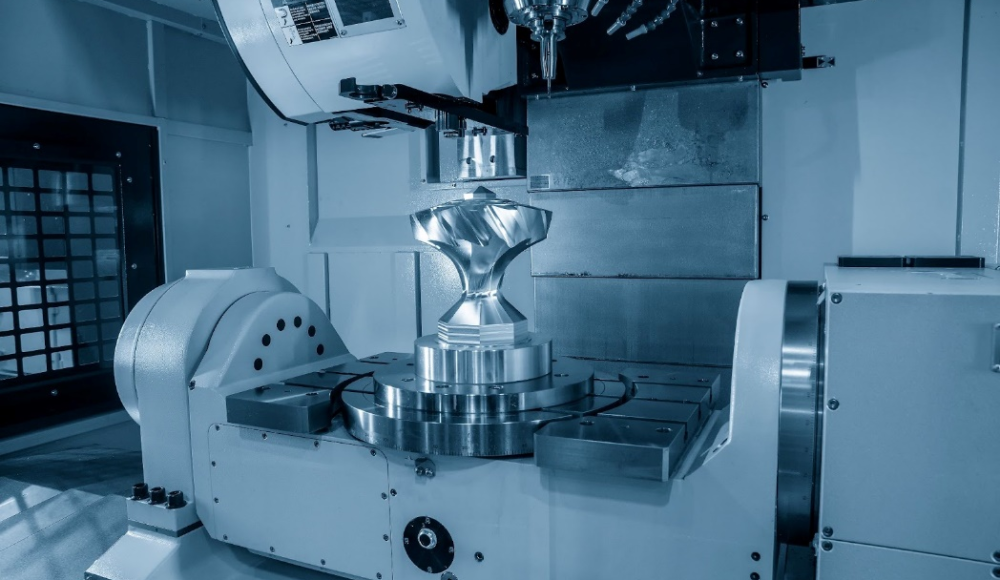
CNC machining is a state-of-the-art manufacturing technique that, with its unparalleled precision, efficiency, and versatility, has transformed a number of industries. We will examine the definition of CNC machining, its different varieties, its crucial function in industry, the value of accuracy, its range of applications, and its capabilities in this extensive guide. We will also explore the materials commonly used in this innovative technology, as well as the specialized 5-axis CNC machining.
What is CNC Machining?
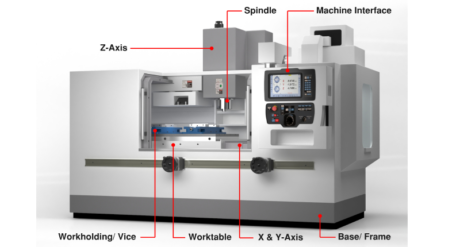
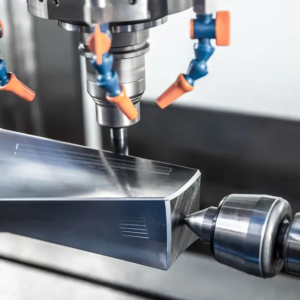
The highly sophisticated manufacturing process known as CNC machining, or computer numerical control machining, uses machines that are controlled by a computer to shape, cut, or remove material from a workpiece in order to create precise and complex parts and components. In CNC machining, the movements and operations of the machining tool which can include drills, mills, lathes, and other cutting instruments are directed by a computer program that contains exact instructions and codes.
The key characteristics and elements of CNC machining include:
- Computer Control
CNC machining relies on computer software to control the movements and actions of the machining tool, providing a high level of automation and precision.
- Precision
The production of components with remarkable accuracy and consistency is guaranteed by the exceptionally tight tolerances that can be attained through CNC machining.
- Versatility
CNC machines are appropriate for a broad range of applications since they can be programmed to work with a variety of materials, such as metals, polymers, wood, and more.
- Complex Shapes
CNC machining can produce complex and intricate shapes that are difficult or impossible to accomplish with hand machining techniques.
- Efficiency
High production efficiency is provided by CNC machining, which lowers lead times and component manufacturing costs.
Types of CNC Machining
CNC machining comes in various forms, including:
1. Milling
To shape a stationary workpiece into the desired shape, material is removed using a rotating cutting tool.
2. Turning
When a cutting tool is used to remove material, the workpiece is rotated. For making cylindrical shapes, it is perfect.
3. Drilling
As the name suggests, drilling machines bore holes in workpieces with precision and accuracy.
4. Electrical Discharge Machining (EDM)
EDM uses electrical discharges to remove material. It’s exceptionally precise and is often used for intricate components.
Purpose of CNC Machining
Producing parts and components with extraordinary accuracy and consistency is the main goal of CNC machining. It allows for the creation of intricate and complex shapes that would be nearly impossible or extremely time-consuming to produce manually. CNC machining plays a crucial role in various industries, contributing to product development, prototyping, and full-scale production.
Importance of Precision in the Industry
Precision is paramount in manufacturing, and CNC machining delivers on this requirement. The high level of accuracy achieved by CNC machines ensures that parts are made to tight tolerances and meet quality standards. Precision is vital in industries like aerospace, automotive, medical, and electronics, where the slightest deviation can have serious consequences.
Applications of CNC Machining
CNC machining has a wide range of applications, including:
1. Aerospace
Producing intricate and lightweight components for aircraft and spacecraft.
2. Automotive
Manufacturing precision parts for engines, transmissions, and vehicle structures.
3. Medical
Creating custom implants, surgical instruments, and prosthetics with exacting precision.
4. Electronics
Crafting circuit boards and intricate components for electronic devices.
5. Defense
Manufacturing critical parts for military equipment, ensuring reliability and performance.
CNC Machining Capabilities
CNC machining offers a host of capabilities, making it suitable for a wide array of manufacturing needs. These capabilities include:
1. High Precision
CNC machines can achieve tolerances in the micrometer range, ensuring accurate and consistent results.
2. Repeatability
CNC machining produces identical parts with every run, making it ideal for mass production.
3. Complex Geometries
It can create intricate shapes and 3D profiles that are challenging for manual machining.
4. Efficiency
CNC machining is highly efficient, reducing production time and costs.
5. Quick Prototyping
Rapid prototyping is possible, allowing for the swift development of new products and designs.
5-Axis CNC Machining
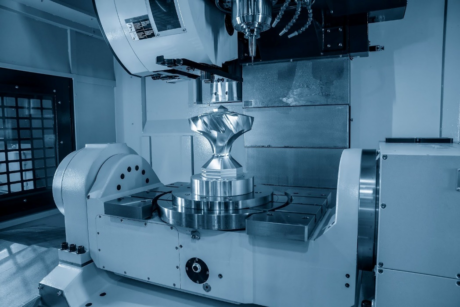
5-axis CNC machining takes the capabilities of CNC machining to the next level. It allows for simultaneous movement of the cutting tool in five different axes, providing unmatched flexibility. This technology is especially useful for creating complex parts with intricate shapes and contours, reducing the need for multiple setups and improving overall efficiency.
Materials Used in CNC Machining
CNC machining works with a wide range of materials, including:
1. Metals
Common metals used include aluminum, steel, stainless steel, brass, and titanium.
2. Plastics
Materials like ABS, acrylic, and nylon are often machined for various applications.
3. Exotic Alloys
CNC machining can handle challenging materials like Inconel and Hastelloy.
4. Wood
CNC machining is also used in wood working to craft intricate designs.
Conclusion
In the manufacturing industry, CNC machining is revolutionary because it provides unparalleled accuracy, productivity, and adaptability. CNC machining is essential to many different industries, whether it is used to produce complex automotive parts, intricate medical devices, or essential aerospace components. With the development of 5-axis CNC machining, there are countless opportunities to create complex and complicated components. The selection of materials amplifies the versatility of CNC machining, rendering it a preferred technology for producers aiming for precise, accurate, and productive output.
2 thoughts on “The Beginners’ Guide To Precision CNC Machining”